SA REITs gain 4.2% in June
SA REITs gain 4.2% in June as distribution growth accelerates to 10.58%, outpacing a falling equity market Sector moves back ahead of both equities and bonds for the year to date,...

SA REITs gain 4.2% in June as distribution growth accelerates to 10.58%, outpacing a falling equity market Sector moves back ahead of both equities and bonds for the year to date,...

SA REITs recover 5.9% in April as oversubscribed capital raises indicate renewed institutional appetite Sector moves back into positive territory year to date, supported by improving fundamentals, growing corporate activity and...
SA REITs pull back 12.3% in March as geopolitical conflict unsettles global markets Sector fundamentals hold firm as geopolitical uncertainty weighs on sentiment, while distribution growth climbs to 9.43% and index...
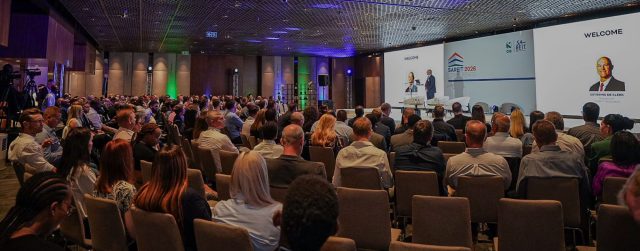
Global shockwaves, local momentum: Inside the sold-out SA REIT Conference A month on from the sector’s marquee gathering, the message is clear: South African REITs have shifted from survival mode to...

SA REITs start 2026 on constructive footing as improved sentiment drives sector ahead of sold-out conference Distribution growth turns positive and balance sheets strengthen as sector momentum builds South African real estate...
Chief Executive Officer – Growthpoint Properties SA
Chairman – SA REIT Association
Estienne de Klerk is a qualified Chartered Accountant with 25 years’ experience in the listed property sector. During the 25 years, he has been involved in various corporate action such as take-overs, mergers and acquisitions, transformation deals and capital raises. De Klerk started his career at Eskom Durban Distribution in a marketing role. In 2002, he joined the Investec Property Group’s property fund management business where he was appointed Fund Manager and Executive Director of Metboard. Later on, he became Executive Director and Group Managing Director of Growthpoint before being appointed Chief Executive Officer (SA). Estienne is Chairman of the SA REIT Association and a longstanding member where he served as Chairman of the Taxation and Regulatory Committee since SAREIT’s inception. He is a former President of the South African Property Owners Association (SAPOA) and represented the industry in the Property Sector Charter negotiations.
This will close in 0 seconds
Chief Executive Officer – SA REIT Association
Joanne Solomon holds a BCom in Economics and is a seasoned marketer with 22 years’ experience. She has an established history in the financial services industry, working in one of the largest financial institutions in South Africa. The financial services industry allowed her to diversify her skills at an executive level in commercial property finance and in corporate investment banking. Joanne started her career as the Regional Marketing Manager in the Nedbank property finance division in 1998. She then grew from strength to strength until she served her final position, as Head of Brand and Client Insights at the Nedbank Corporate and Investment Banking division in 2019.
This will close in 0 seconds
Chief Financial Officer at Attacq Ltd
Raj Nana completed his bachelor’s degree in Accounting at the University of Witwatersrand and served his articles with the FirstRand group. During his career in investment banking, Raj was employed at RMB and Barclays Africa Group Limited where he worked in the sectors of property finance, corporate debt and acquisition and leveraged finance. Prior to joining Attacq in April 2014, Raj was a leveraged finance transactor. Raj joined Attacq’s Executive Committee on the 1st April 2016 and was appointed as the Attacq Group, Chief Financial Officer, in June 2018.
This will close in 0 seconds
Burstone Group
Head of Group Finance
Romy Maree is a Chartered Accountant with 10 years of experience in the finance field and currently holds the post of Finance Executive at Dipula Property Fund, a real estate investment trust (REIT) listed on the Johannesburg Securities Exchange (JSE).
Her role includes Group financial statements and integrated report preparation, Group budget planning, Management of the operational finance team, function Internal control evaluation AND Regulatory compliance.
Romy’s journey began as an Audit Senior and Training Accountant with Mazars Cape Town in 2013, moving on to Audit senior specialising in the Real Estate Managing audit process at Mazars USA LLP – NYC in|2019 and progressed to Senior Audit Manager at Mazars Gauteng by 2019. Romy gained analytic and meticulous chartered accounting experience in the audit field of the property sector and the listed REIT environment and is a highly focused individual who displays sound technical ability and up-to-date tax knowledge. Romy skill as a team leader with exceptional communication and interpersonal skills has driven her forward to the point of being elected as the SA REIT treasurer from 2024.
Romy holds a Bachelor of Accounting Science from the University of South Africa. She came in the top 10 with her postgraduate diploma in Accounting from the University of the Western Cape. Romy is a registered Chartered Accountant and is awaiting her Registered Auditor accreditation from The Independent Regulating Board of Auditors.
This will close in 0 seconds

Chief Operating Officer – Redefine Properties
Leon was appointed as financial director and to the board in October 2014 and elected as chief operating officer in February 2021. He is responsible for all aspects of the asset and property management of the business, which includes the general administration of the property portfolio.
Leon Kok is a Chartered Accountant (SA) with an excellent blend of operational experience, sound business acumen and technical accounting knowledge. He joined Redefine in 2014 after a 13-year career at Peermont Global Limited. Prior to this, Leon completed his articles. He remained with KPMG until 2000, after which he moved to Brait SA as Group Financial Manager and then to Emperors Palace as Chief Financial Officer until 2006.
This will close in 0 seconds
Chief Financial Officer at Equites Property Fund
Laila Razack has a BSc (Finance and Accounting) and PGDA, and is a qualified chartered accountant. She joined Equites in 2015 and has played an integral role in improving internal processes within the group as well as growing the scale and sophistication of the overall finance function. Prior to joining Equites, she worked in PricewaterhouseCoopers Inc.’s Advisory division with a focus on mergers & acquisitions. She has a keen interest for environmental, social and sustainable initiatives and serves as a director of The Michel Lanfranchi Foundation (NPC).
This will close in 0 seconds

Group Financial Director – Growthpoint Properties
Gerald Völkel is a Chartered Accountant with over 25 years’ experience. Prior to being appointed Financial Director and Executive Director of Growthpoint Properties in 2013, he spent 12 years at JD Group Limited where he worked as Group Financial Director and later as Chief Financial Officer.
Gerald began his career in the auditing industry, where he was an Audit Partner of Ernst & Young for four years.
This will close in 0 seconds
Chief Legal Officer – Redefine Properties
BA LLB (University of the Witwatersrand)
In July 2009, Tracey was appointed Chief Legal Officer of Redefine Properties. She specialises in property law and real estate, but in her capacity as Chief Legal Officer, she covers a very broad spectrum of legal practice is engaged with and has responsibilities and experience in the legal, operational, and strategic goals of the company. Her experience includes banking and corporate finance, transformation, empowerment and enterprise development initiatives, black economic empowerment, general commercial law, local and international property transactions, M&A, Competition Commission legislation, regulatory law, labour law, and business crime/investigation.
In addition to her experience in the South African market, she is, and has been involved in and gained experience in the international corporate, strategic, legal, operational, and regulatory operations of Redefine Properties. Prior to joining Redefine, Tracey specialised in litigation as a partner in a large legal firm and thereafter established her practice. Tracey was appointed to Madison Property Fund Managers as group legal advisor to Madison, ApexHi Properties Limited, Outward Investments (Proprietary) Limited, and their subsidiaries in 2008.
This will close in 0 seconds
Managing Director – Southern African division of Vukile Property Fund
Chairperson of the Research Committee
Itumeleng Mothibeli is the Managing Director for the Southern African division of Vukile Property Fund, a real estate investment trust (REIT) listed on the Johannesburg Securities Exchange. He oversees a substantial property portfolio valued at around R16 billion. His role includes setting the strategic direction, leading a team of 13 senior managers, and handling operations that generate over R1 billion in net property income annually. His operational focus includes property redevelopment, reducing vacant space, and aggressive financial management. Itu’s journey with Vukile began in 2012 when he was hired as an Asset Manager. He was promoted in 2017 to oversee the asset management department and then took on the leadership of the entire Southern African business in 2019. The swift progression speaks to his proficiency in real estate investment and management.
Before joining Vukile, Itu started as a Research Analyst in real estate at Old Mutual Property in 2007. Here, he specialised in researching opportunities in African and International Emerging Markets. He later joined the Old Mutual SRI Real Estate Fund, where he was part of a small investment team that grew the fund’s assets from R158 million to R520 million in just two years. His focus was primarily on portfolio performance management and driving operational efficiencies.
Itu holds a BCom in Accounting & Management, an MCom in Financial Management and an MPhil in International Business. With 15 years of experience in real estate investment, five at the executive level, he brings a wealth of knowledge to his role. Outside his professional commitments, Itu is dedicated to sustainable business practices and community involvement, notably with the Eluxolweni Children’s Shelter. He also enjoys ultra-marathon running in his spare time.
This will close in 0 seconds
Head of Group Finance and Chief Financial Officer at Growthpoint Properties Limited
Dawie Swarts serves as the Head of Group Finance at Growthpoint Properties Limited and holds the position of Chief Financial Officer for Growthpoint Investment Partners, the funds management arm of Growthpoint. He has been instrumental in enhancing the capabilities of the group finance team to handle more intricate structures and played a crucial role in steering Growthpoint Investment Partners to its current assets under management of R17.9 billion, focusing on deal structuring, finance, and tax aspects.
Dawie, a qualified chartered accountant, holds a MCom (International Tax), MBA, and MSc with a focus on Artificial Intelligence Strategy. His professional background includes significant experience at PwC in both South Africa and the United States, where he worked across Capital markets, Accounting advisory, Assurance, and Deals divisions. He has an interest in artificial intelligence and its implications on the commercial real estate sector.
This will close in 0 seconds
Human Capital and Transformation Manager - Attacq LTD
Chairman of the Transformation Committee
Danny Vermeulen is an experienced transformation practitioner who commenced his career in transformation as a legal advisor 12 years ago. He is an admitted attorney with degrees in business management and law and a postgraduate diploma in property development and management. Danny is the Human Capital and Transformation manager for the Attacq Group, where he has been employed for a decade. He is passionate about purpose-driven transformation and promotes diversity and inclusion in the workplace and the real estate industry.
This will close in 0 seconds
Chief Executive Officer – Burnstone Group
Chairperson of the Investor Committee
B Bus Sci (Finance Hons), FCA (ICAEW), PLD (Harvard Business School)
Having joined the Investec Property Fund’s (now Burstone) executive management team in August 2012, Andrew has been instrumental in growing the Fund from R2bn of local assets into an integrated international real estate business with currently c.R35bn GAV under management and c.R5bn third-party capital under management across South Africa, Europe and Australia. Andrew successfully led the process of internalising the Fund’s asset management functions in South Africa and Europe, culminating in rebranding the Investec Property Fund to the Burstone Group in October 2023. Andrew fulfilled the role of Chief Financial Officer from August 2015 until 1 December 2018, when he became Chief Executive Officer of the Fund. This position is a culmination of Andrew’s commercial, corporate finance and property industry experience, leveraging his skill as a chartered accountant for the benefit of the Fund through all aspects of M&A opportunities, corporate activity, financial structuring and asset positioning to ensure consistent business growth, efficient capital recycling and industry-leading returns.
Before this, Andrew spent eight years in London, where he qualified as a Chartered Accountant, worked in corporate finance, and later headed up the Caesars Entertainment UK team responsible for driving profitability and rolling out new business opportunities across the EMEA region.
This will close in 0 seconds
Chief Financial Officer at Hyprop Investments
Brett Till is a chartered accountant with extensive experience in corporate finance, due diligence work, financial management and reporting, corporate governance, company and commercial law and taxation and exchange control compliance.
He started his career at Fisher Hoffman Stride in Johannesburg, before joining Rebhold Limited in 1998 as a Financial Executive. He was then appointed as the Group Chief Financial Officer in 1999, a position he held until 2007. Brett joined Mentor Africa Limited, a private investment company, in 2007, as the Chief Financial Officer, where he had various financial and corporate finance responsibilities.
This will close in 0 seconds

Chief Operating Officer at Resillient REIT
Nick Hanekom is a qualified chartered accountant and completed his articles with PwC in Johannesburg where after he joined PwC London. On his return to South Africa in August 2005 he was employed by Resilient, initially as company secretary and in May 2011 he became Financial Director of Resilient. Prior to joining Resilient, Nick was Financial Director of Fortress.
This will close in 0 seconds
Chief Executive Officer – Emira Property Fund
Chairperson of the Conference Committee
Geoff Jennett qualified as a Chartered Accountant and had over 20 years of experience in the financial markets before joining the property industry full-time. His career spans a progression of senior and leadership roles with performance-driven companies. Geoff joined Emira in November 2014 becoming Chief Executive Officer and Executive Director in September 2015.
This will close in 0 seconds
Head of Corporate Affairs and Investor Relations – Redefine Properties
BCom (Hons) Accounting (University of Johannesburg)
Lesley joined Redefine Properties in 2010, was promoted to head of finance in 2015 and became head of corporate finance and investor relations in 2019. She plays a pivotal role in identifying and pursuing value-add opportunities to enhance the sustainable financial performance of the company. She also serves as a member of the Management Committee and a standing invitee to the Executive Committee meetings.
Among many others, her core responsibilities include producing and coordinating interim and year-end financial statements, integrated reports and other reports for the company and its subsidiaries and ensuring strict compliance with IFRS and Johannesburg Stock Exchange requirements. Since launching her career as an Audit manager at Grant Thornton Johannesburg in 2007, Lesley has honed her senior leadership skills by supervising financial managers within the company and property management finance areas.
This will close in 0 seconds
Chief Financial Officer – Resilient REIT
Monica Muller completed her articles at Deloitte where after she qualified as a chartered accountant. While working at Deloitte, she was then appointed Manager in the audit division in 2010 and was later promoted to Senior Manager in 2012. She joined Resilient in October 2013 as a Financial Manager and was appointed as the CFO in March 2020.
This will close in 0 seconds
Chief Finance Officer and Financial Director at Fortress REIT
Ian Vorster completed articles at PKF Johannesburg Inc and qualified as a chartered accountant in 2006. In 2007 he joined the PKF Corporate Division, where he was appointed a partner in 2009. Following the PKF and Grant Thornton Johannesburg merger in 2015 Ian was appointed the Head of the Grant Thornton Corporate Finance Division.
Vorster has extensive experience in due diligence investigations, valuations, fairness opinions – in terms of the Companies Act and the JSE – and Reporting Accountants’ work in respect of companies listed on the JSE.
This will close in 0 seconds
Chief Financial Officer – Vukile Property Fund
Laurence obtained his bachelor’s degree in Business from the University of Witwatersrand in 1993 and his bachelor’s in Accounting in 1995 from UNISA. He has more than sixteen years’ experience in listed property asset management in South Africa, having previously served as CFO of retail-focused REIT Hyprop Investments from 2003 to 2018. Cohen joined Vukile in March 2019 and was appointed to the board as CFO in July 2019.
Laurence has extensive experience in various aspects of property asset management, including REIT regulation, IFRS and JSE reporting, deal structuring, debt and treasury management and investor relations. He was instrumental in the publication of the first BPR and previously chaired the Accounting and JSE Committee and served on its Executive Committee.
This will close in 0 seconds
Group Financial Manager – Attacq Ltd
Henry Kuhn is a qualified chartered accountant who after being involved in a number of property company audits during his articles pursued his passion for property in joining the Atterbury Property Group. Since then, he joined the Attacq Limited group assisting the company with the listing in 2013 as well as conversion to a REIT in 2018. He is currently performing the role of Group Financial Manager for the Attacq Group.
This will close in 0 seconds
Chief Financial Officer - Burstone Group
Jenna joined the Fund in August 2014 and became an integral part of the management team in supporting the growth of the business. Jenna has well rounded experience in the business being responsible for Finance, Reporting, and Balance Sheet, and acts as a strategic partner in all decision making. She also assisted in driving the Fund’s Environmental Social Governance (ESG) strategy. She fulfilled the role of Chief Financial Officer (CFO) from 1 December 2018 to 30 November 2020, at which time she stepped down from the role to spend more time with her young family. On 1 July 2022, Jenna assumed the role of interim CFO and was appointed permanently in the role on 20 January 2023. Jenna has extensive experience in managing the balance sheet and treasury function across both South African and European businesses. Prior to joining the Fund, Jenna was the Financial Manager at Annuity Properties Limited, which she joined shortly after it listed until its sale to Redefine Properties. Post-graduation, Jenna completed her accounting articles and gained experience at KPMG Johannesburg and KPMG New York.
This will close in 0 seconds
Partner – Fasken
Conor McFadden advises both domestic and international clients on direct and indirect taxation matters relating to corporate and business law, including the tax aspects of mergers and acquisitions, securities, corporate restructurings, cross border transactions, transfer pricing, thin capitalisation, employee share option schemes and State royalties on mineral resource transfers.He is regularly involved in making representations to the National Treasury on draft revenue legislation and applying for Advance Tax Rulings on behalf of clients from the Advance Tax Ruling Unit.Conor also has extensive experience in tax litigation and alternative dispute resolution and deals with the South African Revenue Service on a regular basis. He represents clients with regard to the South African Exchange Control Regulations and assists clients in obtaining exchange control approval from the Financial Surveillance Department on both inward and outward investments.
Conor has also been involved in setting up a number of public benefit organisations (charities) and obtaining tax exempt status for such organizations from the Tax Exemption Unit.
Conor currently serves as Chairperson of the Tax Board in South Africa, Gauteng division, a five year appointment.
This will close in 0 seconds
Partner at Fasken
Werner De Waal is a Partner at Fasken in the Corporate & Commercial, and Real Estate practice areas.
He advises on M&A transactions, general corporate law, infrastructure projects, joint ventures, partnerships, private equity, corporate restructuring, due diligence, commercial law and real estate transactions. In addition, he acts for sponsors, funders and investors in the energy and infrastructure space.
This will close in 0 seconds
Partner at Fasken Banking and Finance
With a BComm (in Economics) degree and a master’s in corporate law, Pierre Swart specialises in the complete spectrum of debt and equity finance activities, including capital markets, DCM products, structured finance, regulatory work and market infrastructure-related work (such as the JSE and other exchanges).
Pierre’s experience extends to all areas of debt and equity funding, including corporate and M&A work and bilateral and syndicated loans, taking security, preference shares, corporate bonds and asset-backed financing.
He also has extensive experience in debt workouts and corporate restructurings, traditional and synthetic securitisation structures, invoice discounting and debt factoring, leveraged and acquisition finance, as well as local and cross-border real estate funding, property and financial regulatory work.
This will close in 0 seconds
Financial Director at Vukile Property Fund Ltd
Lizelle Pottas has been the Financial Director at Vukile since 2018. In this role, she oversees group reporting, IFRS compliance, JSE compliance, and internal and external audits.
Before joining Vukile, Lizelle worked at ABSA in the Technical Advisory Group from 2015 to 2018. She also served as a part-time accounting lecturer at Varsity College Sandton between 2014 and 2016. Her earlier experience includes roles at PWC, where she was part of the Accounting Consulting Services in 2014, worked in the Washington Metro (USA) from November 2013 to April 2014, and specialized in Financial Services: Insurance & Investment Management from 2012 to 2013. Additionally, she completed academic articles at the University of Johannesburg in 2011.
Lizelle is a Chartered Accountant (CA(SA)) and holds a BCom Accounting degree (cum laude) and a BCom Accounting Honours degree, both from the University of Johannesburg.
This will close in 0 seconds

Chief Operating Officer – Equites Property Fund
Riaan Gous has an LLB and was previously a director of one of the predecessor firms of Cliffe Dekker Hofmeyr Inc. where he gained extensive exposure to real estate transactions. He then spent some 10 years as an executive director of the Arabella Group and was actively involved in the development of their property portfolio.
His legal knowledge in the property sector has proven invaluable in the listing process and the many significant transaction Equites has concluded to date.
This will close in 0 seconds
Head of Legal at Growthpoint Properties
BCom LLB, LLM (corporate law)
Samantha Jardine joined Growthpoint in 2014. She was a practising attorney and conveyancer in her earlier career and has been involved in the property industry for over 20 years. She has become a specialist in all aspects of property law, including leasing, landlord and tenant law, conveyancing, developments, and competition law.
This will close in 0 seconds
National Legal Executive – Hyprop Investments
Desirée Nafte joined Hyprop in 2011, and before that, she was a practising attorney.
Nafte entered the commercial property industry in 2001 as a Legal Advisor, specialising in property law as well as landlord and tenant law.
This will close in 0 seconds
Head of Legal – Liberty Two Degrees
Farhana Haffejee is the Head of Legal at Liberty Two Degrees.
This will close in 0 seconds
Deputy Chairman – Oasis Crescent Property Fund
Nazeem Ebrahim has a B.Soc.Sci. and a B. Proc and in 1996 was admitted as an Attorney to the High Court of South Africa. He has been involved with the Board of Oasis Group Holdings in an advisory capacity since its inception in 1997.
Nazeem’s professional experience includes over twenty years of business and professional legal practice. He is an official member of the Industry Supervision Standing Committee of the Association of Collective Investments of South Africa. He has served on the Board of the Institute of Retirement Funds, the Association of Collective Investment Schemes, and the Investment Managers Association of South Africa. Ebrahim completed formal qualifications from the Graduate School of Business Administration of the University of Witwatersrand which qualifies him to serve as a Director on the ALT X Board of the JSE.
This will close in 0 seconds
Partner: Real Estate – Fasken
Johan Coetzee is Head of the Real Estate Team and a leading Commercial Attorney in Fasken’s Johannesburg office, with recognised expertise in competition law. He also specialises in commercial property transactions and all related real estate law matters. Johan advises the REIT sector, and his experience includes advising some of the largest commercial property developments and mergers in the REIT sector in South Africa over the last few years.
With more than 30 years of extensive experience as a commercial attorney in the real estate sector, he acts for numerous clients in South Africa. His work in this area consists of all aspects of real estate work, including conveyancing and notarial work, commercial property developments, sectional title schemes, registration of leases, servitudes and mortgage and notarial bonds for lenders in renewable energy projects, property legal, due diligence investigations and clients in the mining and manufacturing industries.
Within competition law, Johan works with clients from a broad range of sectors. He prepares merger notifications to the South African competition authorities, including in the steel, manufacturing, property management services and REIT sectors; provides compliance advice and training to clients; and provides opinions on competition law considerations in the consumer goods, agricultural services and aviation sectors.
This will close in 0 seconds
Head: Marketing & Communications – Growthpoint Properties
Cindi-Leigh Breed has over 25 years of experience as a real estate and financial services marketing professional. She has spearheaded high-impact marketing initiatives with ambitious campaign goals across diverse channels. Her work experience includes developing effective brand strategies, promotional events and marketing campaigns aligned with strategic corporate objectives.
Before joining Growthpoint, Cindi-Leigh’s career included a progression of key marketing positions at top-tier organisations, including Investec Bank and Macquarie. In addition to her innovative marketing acumen, Cindi-Leigh holds a Bachelor of Arts in English and Communications.
This will close in 0 seconds
Global Head of Marketing at Burstone
Cheryl brings over 25 years of experience in the marketing industry, with deep expertise spanning the full spectrum of the marketing landscape. Her approach is grounded in the power of storytelling, creativity and data-driven decision-making, consistently delivering brand experiences that resonate and produce measurable outcomes.
As Global Head of Marketing at Burstone, Cheryl leads with purpose, driving sustainable growth across the global business. She connects teams to a shared vision, champions innovation and oversees the development and execution of integrated marketing strategies that align with the organisation’s long-term goals.
This will close in 0 seconds
Head: Marketing & Stakeholder Affairs – Redefine Properties Ltd
BCom in Marketing, Advertising and Business Administration (University of KwaZulu-Natal)In his current role, Doug leads a world-class team, responsible for marketing the Redefine Properties brand, mall brands, and all other sub-brands. His role includes managing alternative income and driving stakeholder engagement across the company’s key stakeholders.
Doug joined Redefine in 2016 as a National Non-GLA Sales Manager, where he was responsible for the company’s income across retail, commercial, and industrial property sectors. In 2021, the role of Retail marketing manager was added to his responsibilities, where he focused on digital, community, and tenant support. One year later, Doug was appointed as head of the marketing department.
Doug is also highly skilled in new business development, brand management, people development, project management, budgeting, innovation and new idea execution, negotiation, commercialisation, sales revenue, and stakeholder relations.
This will close in 0 seconds
Marketing Executive – Equites Property Fund
Shirley McMurray-Wolmarans holds an Honours Degree in Business Management: Marketing as her highest qualification. Since 2008, she has gained extensive experience in marketing event management at an international level, including executing large-scale exhibitions and trade shows for significant brands, before moving more specifically into senior marketing executive roles, with a focus on brand positioning and exposure.
Shirley joined Equites in 2021 and has applied creative and strategic thinking, to establish Equites in the digital space and grow the REIT’s online footprint across platforms, driving engagement and growth.
This will close in 0 seconds
Partner – Fasken
Janke Strydom is a Corporate and Commercial Real Estate Partner at Fasken with eight years post qualification experience.Her practice comprises commercial real estate agreements and conveyancing transactions, including bond registrations, transfers, subdivisions, consolidations, township establishment and the opening of sectional title schemes for a range of clients, including REITs, financial institutions and property developers.
Janke’s experience includes advising on complex commercial real estate transactions and corporate and commercial advice concerning sectional title developments, large intra-group restructures, the sale of commercial letting enterprises and real security transactions. These include, amongst other things, the registration of mortgage bonds, notarial bonds, ship and aircraft mortgages and the cancellation and cession of these bonds.
She has broad experience in commercial real estate transactions and corporate law, including drafting sale agreements, co-ownership agreements, shareholder agreements, bespoke MOIs and commercial lease agreements.
This will close in 0 seconds
Head of CSI and Transformation – Fortress REIT
Jodie Ellinor-Dreyer FCA CA(SA)
Financial Manager and Head of Corporate Social Investment & Transformation
Fortress Real Estate Investments Limited
Jodie, an ordinary person with extraordinary determination, has been working within the Fortress group structures for over 20 years doing what she loves.
“Start by doing what is necessary, then what is possible, and suddenly you are doing the impossible.” St Francis of Assisi
This will close in 0 seconds
Funding Officer – Attacq
Pierre Le Roux is a Chartered Accountant with over 15 years of expertise in the financial services sector, with Commercial Property Finance and Treasury specialisation. He joined Attacq in 2018 as the Funding Officer, with overall responsibility for Attacq’s debt funding and interest rate risk management.
Before joining Attacq, Pierre spent seven years with First National Bank as a Dealmaker in New Business Acquisitions and Commercial Property Finance in South Africa and sub-Saharan Africa. In addition to originating new commercial property finance business, he assisted the FNB African subsidiaries in designing solutions for clients, obtaining approval from the relevant credit committees, and drafting and implementing their commercial property finance risk management policies.
This will close in 0 seconds
General Manager (Inland) – Property Management, Redefine Properties
Poovendran Reddy is the General Manager (Inland) of Property Management at Redefine Properties, where he oversees the property management of the inland property portfolio across office, retail, and industrial sectors. With a background in BCom Accounting and PGDA from the University of KZN, Poovendran joined Redefine Properties in 2020 as Head of Operational Finance, bringing with him over a decade of experience in the hospitality sector.
In his previous role, Poovendran managed the day-to-day operational finance functions, including taxation, before being promoted to his current position in March 2023. In addition to managing the property portfolio, he also provides oversight of BBBEE initiatives and their monitoring.
Poovendran’s expertise lies in combining financial acumen with operational excellence, making him a valuable member of the Redefine team. He is actively involved in the Management Committee and the Management Risk Committee, contributing his insights and leadership to drive the company’s success.
This will close in 0 seconds
HR & Transformation Manager, Vukile Property Fund
Nomsa is the HR & Transformation Manager at Vukile Property Fund Ltd. In her current role, she manages the human resources processes, drives the B-BBEE goals and superintends the skills development initiatives. She is a Professional Accountant (SA) with degrees in Financial Accounting and Accounting Sciences. She is currently enrolled for a post-graduate degree in HR and Business Management with the University of Witwatersrand. She is passionate about people management and fostering transformative change in the workplace.
This will close in 0 seconds
Associate Professor at the University of Pretoria
BSc Construction Management, MSc Real Estate, PhD Real Estate, Business Leadership Certificate, Project Management Professional Certification
Douw has close on 30 years of experience in the property and construction sectors. He started his career in project management with Barrow Projects and Property Finance with Rand Merchant Bank. Also, he spent about 10 years in academia with the University of Pretoria. During that time, he supervised 20 research students at the master’s and doctoral levels and published more than 50 papers in academic journals, conference proceedings and other trade publications. He is a Professional Valuer (SACPVP) and Chartered Valuation Surveyor (RICS).
This will close in 0 seconds
Chief Investment Officer, Spear REIT Limited
Kim is the first female member of the Spear Executive Committee. Kim has 18 years experience in the listed and non-listed real estate sector.
Kim’s qualifications include a BSc (Hons) Property Studies (UCT), a Certificate in Lease Negotiation (University of Pretoria), is a member of the Royal Institute of Chartered Surveyors (MRICS), a Registered Valuer of the Royal Institute of Chartered Surveyors (RICS) and a Professional Valuer (SACPVP).
Kim performs a strategic role across the business at Spear, focusing on acquisition, disposals, portfolio valuations and other corporate business requirements.
This will close in 0 seconds
Founder, Philbar Consulting; Director, Pooled Data Services (Pty) Ltd
A thought leader and independent consultant on real estate investment and ESG strategies, Phil Barttram has over 27 years of experience in the financial sector, having worked in the UK, South Africa and the Middle East.
He spent nearly a decade as an Executive Director at MSCI and is currently in the start-up stage of building a collaborative data business.
Phil’s interest lies in investment strategy and portfolio optimisation, and on utilising the value of data virtualisation to improve strategic investment decisions. Since going out on his own, Phil has taken an interest in the impact of ESG risk and opportunity factors on portfolio buy-sell-hold strategies.
As an established authority on South African real estate and ESG, Phil is a regularly invited conference speaker and frequent contributor to trade and mainstream media publications. He holds an MBA from UCT’s Graduate School of Business and currently serves as Deputy Chair of the Green Building Council South Africa (GBCSA), is a past Non-Executive Director of the SA Council of Shopping Centres (SACSC), and is a member of the SA REIT Association’s Research Committee.
This will close in 0 seconds
Head of Research – Sefikile Capital
Naeem holds a qualification as a Chartered Accountant (CA SA) and is a Chartered Financial Analyst (CFA) charter holder. With 11 years of experience in the listed property sector, he embarked on his professional journey after earning a Bachelor of Accountancy degree from the University of Witwatersrand. Naeem’s career took off at PricewaterhouseCoopers.
Before joining Sesfikile Capital, Naeem was executive director and senior listed property analyst at Avior Capital Markets. His outstanding expertise was acknowledged by the Financial Mail, where he received the top-rated analyst award for three consecutive years, as recognised by industry peers.
This will close in 0 seconds
Economist – STANLIB
Ndivhuho Netshitenzhe obtained her undergraduate degree in Economics and Politics from Rhodes University and has two Masters’ degrees: one in Economics from University of Pretoria and a second in Finance from Cambridge University. Ndivhuho has 7 years’ experience in the property sector and began her career at the South African Reserve Bank, where she joined as a graduate in 2013 in the Financial Stability department. Since then she has worked on macroeconomic policy, helping develop South Africa’s macroprudential policy and financial stability monitoring framework.
In her current role at STANLIB which was effective in 2019, Ndivhuho is responsible for conducting macroeconomic research and forecasts with a focus on South Africa and China. As a research economist, she has authored a number of research papers which have been presented at The Economic Society of South Africa conferences.
This will close in 0 seconds
Associate Professor – University of the Witwatersrand
Professor Kola Akinsomi has over 15 years’ experience in the property sector and holds a PhD in Real Estate Finance and MSc in Real Estate from the National University of Singapore as well as a BSc in Real Estate Management with Honours from Oxford Brookes University, England. He has been a visiting researcher at the National University of Singapore, University of Tokyo, Japan and the University of Western Sydney, Australia. Kola is the Vice-President and board member of the African Real Estate Society and on the board of directors of the International Real Estate Society. He is on the Advisory Forum of the South African Council for Property Valuer and Profession (SACPVP). In addition, Kola is the Chair of the future leaders of the American Real Estate Society (FLARES). He has served on the program committees for the African Real Estate Society, American Real Estate Society and European Real Estate Society conferences.
This will close in 0 seconds
Partner – Fasken
Jacques Marais is a Senior Associate at Fasken and works in the Real Estate team in Johannesburg, advising clients on commercial property transactions, renewable energy project developments (infrastructure and development) and all related real estate law matters. He has a proven track record of being a part of legal teams advising some of the largest commercial and residential property developers and REITs in South Africa over the last few years.
Jacques’ work in the field of law consists of all aspects of real estate work, including conveyancing, property finance, commercial property developments, renewable energy project developments (infrastructure and development), sectional title schemes, retirement villages, mergers and acquisitions.
This will close in 0 seconds
Chief Executive Officer – Vukile Property Fund
Chairman of the Investor Committee
He is a well-respected thought leader with over 12 years of experience in the property industry. As a forward-thinking and results-driven leader, he has successfully navigated the complexities of the corporate landscape and made significant contributions to the real estate sector. With a keen focus on general management, corporate finance, capital markets and real estate, Laurence has garnered a reputation as a dynamic and strategic visionary.
Previous roles include Head of Insurance and Asset Management at Standard Bank and Chairman of Synergy Income Fund Limited. Currently, Laurence serves as Chairman of Castellana Properties SOCIMI SA and holds directorships in various Vukile group entities. His dedication to innovation makes him a driving force in the real estate sector, and his leadership and passion inspire the next generation of property professionals.
He was appointed Chief Executive Officer at Vukile Properties on 1 August 2011.
This will close in 0 seconds
Portfolio Manager – M&G Investments
Yusuf Mowlana holds a Bachelor of Business Science and is a qualified Chartered Accountant and Chartered Financial Analyst. He is currently responsible for all property funds at Prudential Investment Managers. Additionally, Yusuf co-manages the Prudential Equity Fund and the institutional general equity funds for South African and Namibian clients.
Mowlana spent the first five and half years of his investment career at Allan Gray, covering companies across various sectors, before joining Prudential in October 2018. Prior to that, he worked at Deloitte, where he completed his articles.
This will close in 0 seconds
Head of Investor Relations – Attacq Limited
Brenda started her career as a music teacher (BMUS HED, UP) and taught at Waterkloof Primary School, Pretoria. In 2004 she decided to change her career and joined Colenbrander Inc, Pietermaritzburg as an article clerk. Brenda has been the Financial Manager for PrivateProperty.co.za, Atterbury Property Holdings and Attacq Limited, before being appointed in the role of Head of Investor Relations in 2017. Brenda is a qualified CA (SA) and holds an MBA from the Graduate School of Business, UCT.
This will close in 0 seconds
Chief Executive Officer – Fairvest Limited
Darren Wilder is currently the CEO at Fairvest Property Holdings Limited and has over 30 years’ experience in all aspects of the property industry. His various portfolios include Asset Management, Property Management, Leasing, Property Development and Management. He worked for Seeff Properties in various positions from 1991 until 1997. In 1997 he was appointed to the board of the then JSE-listed company, Capital Alliance Properties, and was a participant in its management buy-out. Wilder was part of the team that listed Spearhead Property group on the JSE and was appointed COO in 1999. Darren’s work experience also includes National Leasing Director for Madison Properties, Business Development Director of the V&A Waterfront and a Consultant to the Chief Executive Officer of the V&A Waterfront.
This will close in 0 seconds
Head: ESG, Strategy & Investor Relations – Growthpoint Properties
With over two decades of experience in the financial sector, Lauren has an exceptional understanding of local and international financial markets, products and participants.
Starting her career in the financial services division at Deloitte and Touche, she went on to structure and sell interest rate products for institutional investors at the Fixed-Income Desk of Standard Bank. Coming from a third-generation stockbroking family and driven by her passion for the equity markets, Lauren then made strategic moves to the JSE and, gaining valuable insight into the offshore investment community, to BNY Mellon as Vice President of their American Depositary Receipt Business for Sub-Saharan Africa.
Today, as Head of ESG, Strategy & Investor Relations at Growthpoint, she applies her strong relationships and expertise to fostering a culture of excellence in the various aspects of her high-performance role. Lauren is a CA(SA), a member of the South African Institute of Chartered Accountants (SAICA) and sits on the Group Executive Committee of Growthpoint.
This will close in 0 seconds
Founder and Managing Partner – REdimension Capital
Peter is the Founder and Managing Partner of REdimension Capital, an investment manager focused on technology and innovation companies solving challenges for the built environment. He also serves on the Africa Proptech Forum advisory board and the SAPOA Proptech committee.
Previously, Peter was Head of Property Investments for Ninety One, where he managed a range of portfolios in South Africa and globally valued more than $1bn. Peter is a CFA charter holder with an honours degree from the University of Cape Town and a master’s degree from the University of Cambridge.
This will close in 0 seconds
Chief Executive Officer of Attacq Ltd
Chairperson of the Marketing and Conference Committee
Jackie joined Attacq as the Chief Operating Officer in June 2017 and was appointed to the board in June 2018. Jackie has over 14 years of experience in the property industry and prior to joining Attacq, was the Chief Executive Officer of Pivotal.
At the end of 2016, she successfully concluded the merger between Pivotal and Redefine Properties. Jackie joined Pivotal Property Fund in 2009 and became the youngest and only woman Chief Executive Officer in the property sector at the time, growing the fund to a R12 billion listed development fund.
She established Pivotal’s offshore strategy by successfully concluding the merger of Mara and Delta Africa to create the MaraDelta Africa fund and acquired an equity stake in Echo Property Polska based in Poland.
This will close in 0 seconds
Chief Operating Officer at Diversifi
Eric has 11 years' experience in B-BBEE and Transformation and before that 12 years' experience in Financial Auditing. Prior to joining Alternative Prosperity he was the Verification Director at a leading B-BBEE Verification Agency. He started his career as a Chartered Accountant and Auditor during which time he worked in the UK and Germany for 3 years. He is experienced in the Automotive, Advertising, Financial, Construction and ICT industries.
This will close in 0 seconds
Company Secretary & Legal Executive at Equites Property Fund
Experienced Property and Development professional with a demonstrated history of delivering major Negotiation and developments for clients. Strong strategic capability, professional skilled in Asset Management Asset Management across the Due Diligence and development sectors including residential (including high-rise), commercial properties, industrial property, retail land, hotels and master planning. Significant experience in managing large scale complex multi-use projects. Broad understanding of urbanism and its impacts on people and property
This will close in 0 seconds
Research Analyst and Assistant Property Portfolio Manager at Truffle Asset Management (Pty) Ltd
Pranita is a qualified chartered accountant, having completed her undergraduate at WITS and honours at the University of Johannesburg. She has served three years of articles at KPMG, working in the consumer markets and technology sector where some of her biggest clients were Yum Restaurants and Business Connexion, to name a few. She joined the sell-side covering listed property at Anchor Stockbrokers in January 2018 where she served four years before joining Standard Bank Securities. Pranita has participated in the Financial Mail Analyst Awards since 2019 and was ranked third in 2019, second in 2020, 2021 and 2024 and first in 2022 and 2023. She has also served on the SA REIT Research Committee and is currently the vice chairman of the Women’s Property Network having served on the exco since 2020. Pranita joined Truffle in January 2025 as a Research Analyst and Assistant Property Portfolio Manager.
This will close in 0 seconds